Radar sign-language simulation
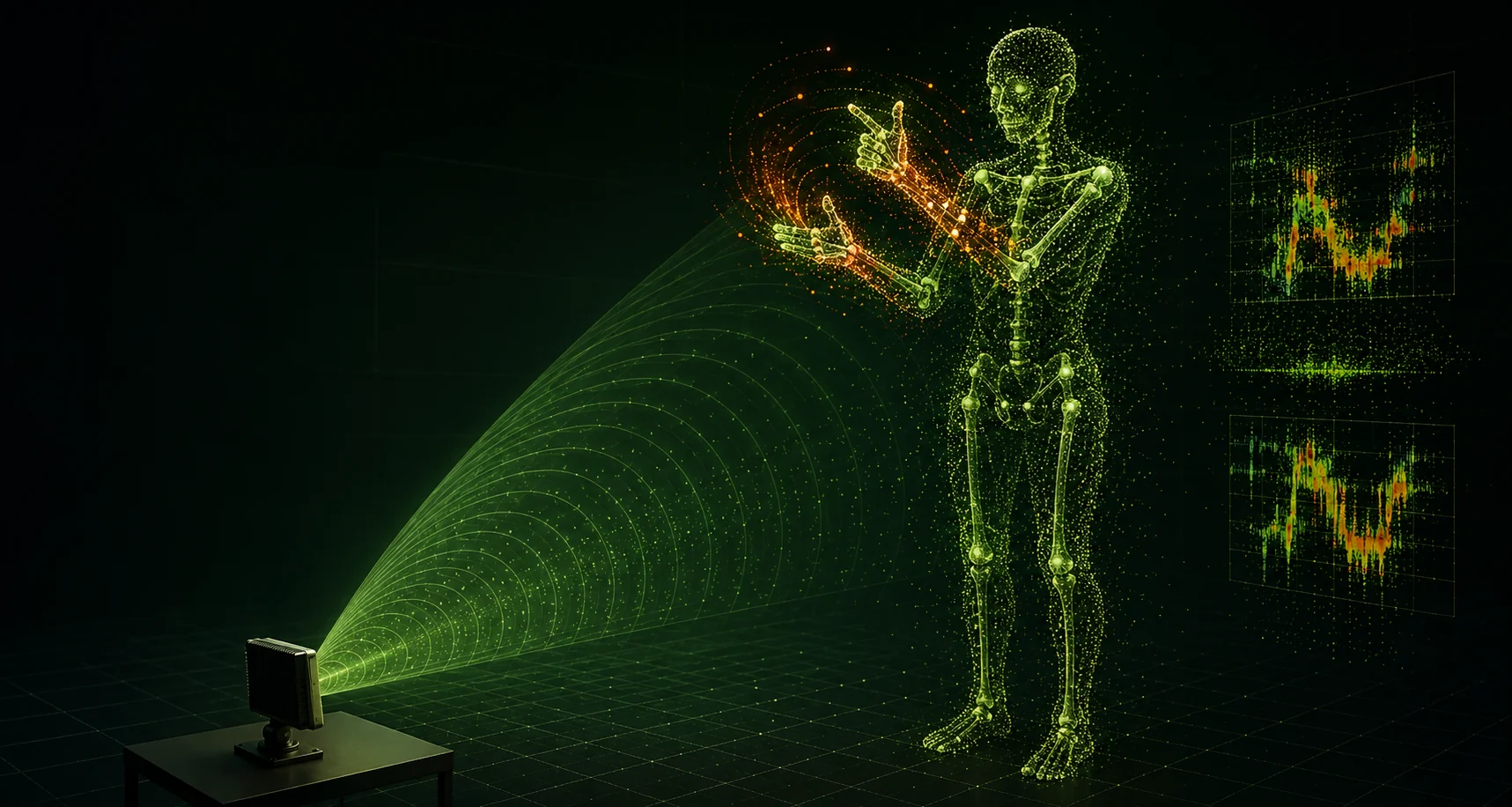
Developing LinguaRadar to generate radar representations of BSL signing motion.
EPSRC-funded research · University of Southampton
Advancing BSL interpretation and inclusion through non-intrusive, privacy-preserving radar technology.
Many smart technologies are designed around voice. But voice-first systems do not naturally support people who communicate using British Sign Language.
RADAR-SIGN-BRIDGE is developing radar technology so future smart devices could respond to BSL, not only spoken commands. Radar can sense signing movement patterns without recording normal video images, opening a more private and accessible direction for interaction.
Read the project overviewWhat we are developing
From creating radar signals to connecting them with language and useful smart-device actions.
Developing LinguaRadar to generate radar representations of BSL signing motion.
Exploring how existing BSL video and motion resources can address radar-data scarcity.
Connecting changing radar signals with signs, glosses, phrases, and English commands.
Testing how future devices could respond safely and usefully to BSL-based commands.
Why radar?
Radar uses radio waves to measure reflections from hands, arms, and the body. Unlike a normal camera, it does not record a conventional visual image or video of the person.
Early use cases could include lighting, heating, media, communication, reminders, doorbell alerts, and calls for help. The priorities should be shaped with Deaf and BSL communities.